In Folha, Viana tells the story of Kurt Gödel.
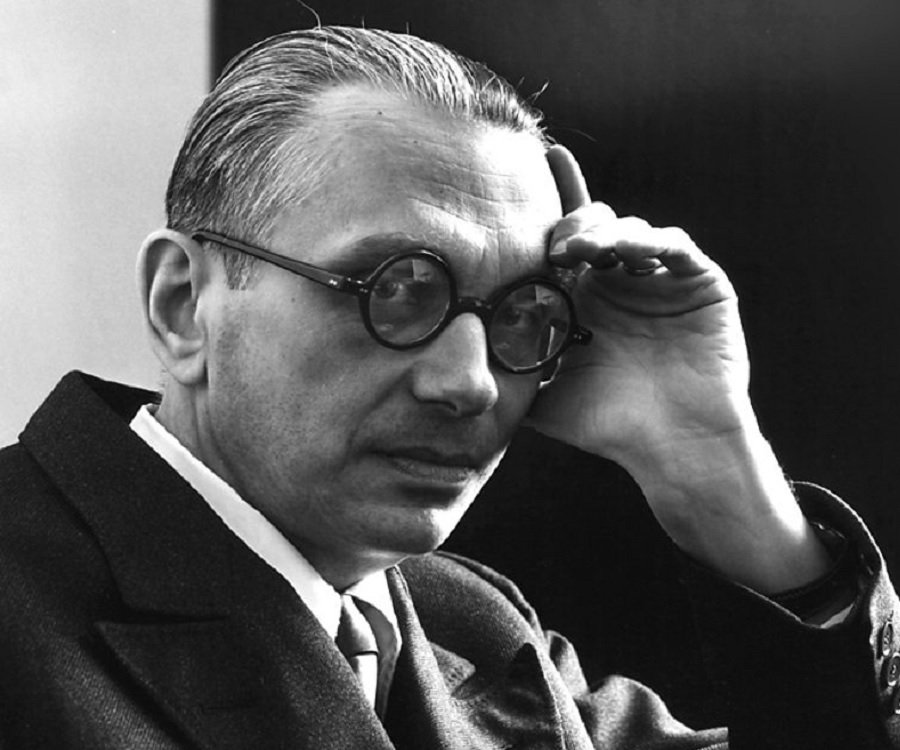
Matemático Kurt Gödel – Reprodução
Reproduction of Marcelo Viana's column in Folha de S. Paulo.
Around my third year of college at the University of Porto, my nerdy friends and I developed a great interest in mathematical logic, especially the advances made in the 20th century following the discovery of the paradoxes in set theory by Georg Cantor (1845–1918).
In bookstores, we found the Portuguese translation of the thick volume "Gödel's Theorem and the Continuum Hypothesis," published a few years earlier by the Calouste Gulbenkian Foundation in Lisbon. The title was too fascinating to pass up – partly because at first we had no idea what it meant! So we all bought it, feeling very grown up. I still have my copy to this day.
Read more: Mathematics Festival opens registration for school visits
IMPA opens three postdoctoral positions.
PAPMEM is accepting applications until July 17th.
German mathematician Kurt Gödel (1906–1978) was born in the city of Brünn, now called Brno, in what was then the Czech Republic , part of the Austro-Hungarian Empire. In 1931, he proved two theorems that changed mathematics and philosophy forever.
The first argument states that any formalization of mathematics is necessarily incomplete: there are always true statements that, nevertheless, cannot be rigorously proven (nor refuted). The second goes further: the very consistency of mathematics, that is, the assertion that it contains no contradictions, also cannot be proven.
As we studied these theorems, we also had fun learning and spreading urban legends about our hero.
In 1938, Gödel moved to the United States, where he became a professor at the then newly created Institute for Advanced Study in Princeton. A few years later, his friend Albert Einstein convinced him to apply for American citizenship.
Knowing that the naturalization process included a questionnaire about the country's history and culture, Gödel prepared diligently.
It was then, according to the story, that he discovered that the US Constitution is inconsistent, that is, it contains rules that are mutually incompatible. Unable to live in a self-contradictory reality, the highly logical Gödel supposedly refused citizenship, much to the perplexity of the government representative and the despair of Einstein.
To read the full text, visit the newspaper's website.
Read also: Marcelo Viana interviews mathematician Suely Druck
IMPA Tech graduate student receives OBMEP gold medal.
TV Globo, Record and O Globo highlight OBMEP awards.