Brazilian mathematics was born open to cooperation.
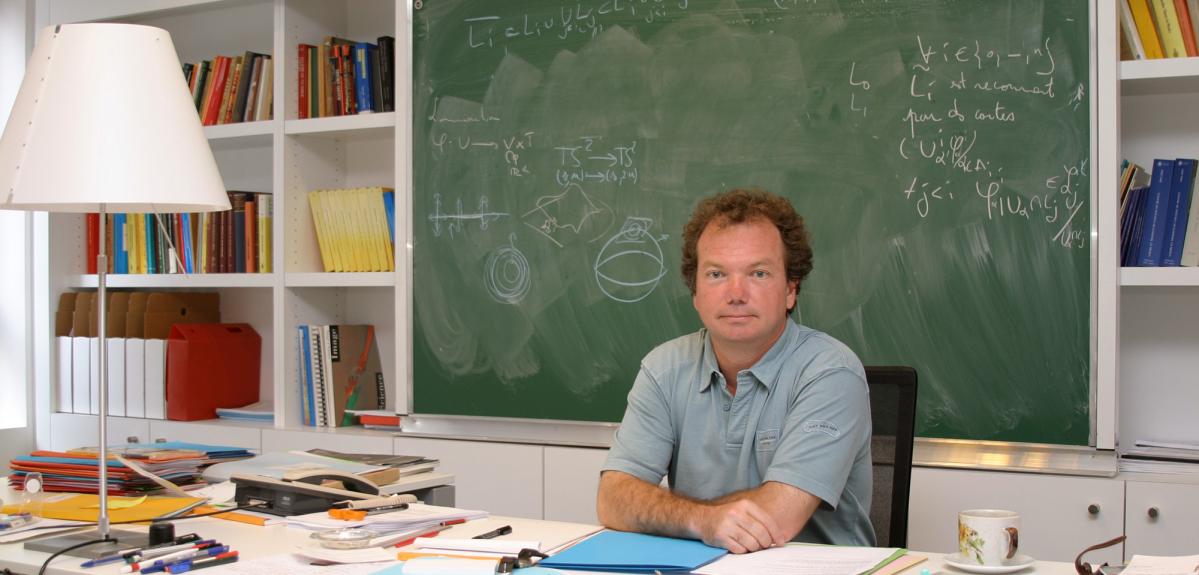
Jean-Christophe Yoccoz
* The text below was part of Brazil's application dossier for Group 5, the elite of world mathematics, of the International Mathematical Union.
Brazilian mathematics was born open to international cooperation. While the first generation of professional mathematics researchers trained and maintained strong ties with the United States, equally strong connections with France were developed over the years, especially from the late 1970s onwards, and remain crucial to this day.
During the 1980s and 90s, several of the most brilliant French mathematicians – Pierre Bérard, Étienne Ghys, Jean-Christophe Yoccoz, Christian Bonatti and many others – visited IMPA for one to two years as part of the French government's "cooperation" program, which replaced their military service.
Read also: Actions encourage female participation in science.
The history of IMPA is intertwined with the history of mathematics in Brazil.
Fields Medal winner Alan Baker dies at age 78.
Cooperation with other important countries is also growing and is reflected in the series of joint meetings organized by the SBM and SBMAC in collaboration with their counterparts in Spain and Italy, for example.
It goes without saying that relations with neighboring Latin American countries have always been a priority. In this context, Brazil has played an important role over the decades. The report “Mathematics in Latin America and the Caribbean: challenges and opportunities,” published in 2014 by the IMU Commission on Developing Countries, highlights its role as a training center for young researchers from across the region:
Several characteristics of this country make it necessary to distinguish it from the rest of Latin America. The level of development of mathematical research in some institutes and universities in Brazil is remarkable, according to the number of publications, the number of doctorates awarded, and other indicators. Brazil has played an important role as a training center for mathematicians from neighboring countries such as Peru, Venezuela, and Paraguay.
Brazil's general policy of granting postgraduate scholarships to students from around the world, without citizenship restrictions or conditions, has attracted a considerable number of top Latin American mathematicians to its graduate schools. For example, almost fifty percent of IMPA's doctoral students are from a Latin American country other than Brazil.
Another significant role has been the building of regional organizations and cooperation networks. In particular, the Unión Matemática de América Latina y el Caribe (UMALCA) was formally established at IMPA headquarters in 1995, and several Brazilian mathematicians have served on its governing bodies since then.
Brazil also plays a very significant role in launching the Mathematical Congress of the Americas (MCA), for example, by hosting the 2011 meeting of organizations and institutions from across the Americas at IMPA, where the organization of the Congress was formally approved, and by supporting the recently created Mathematical Council of the Americas (MCofA) in various ways.
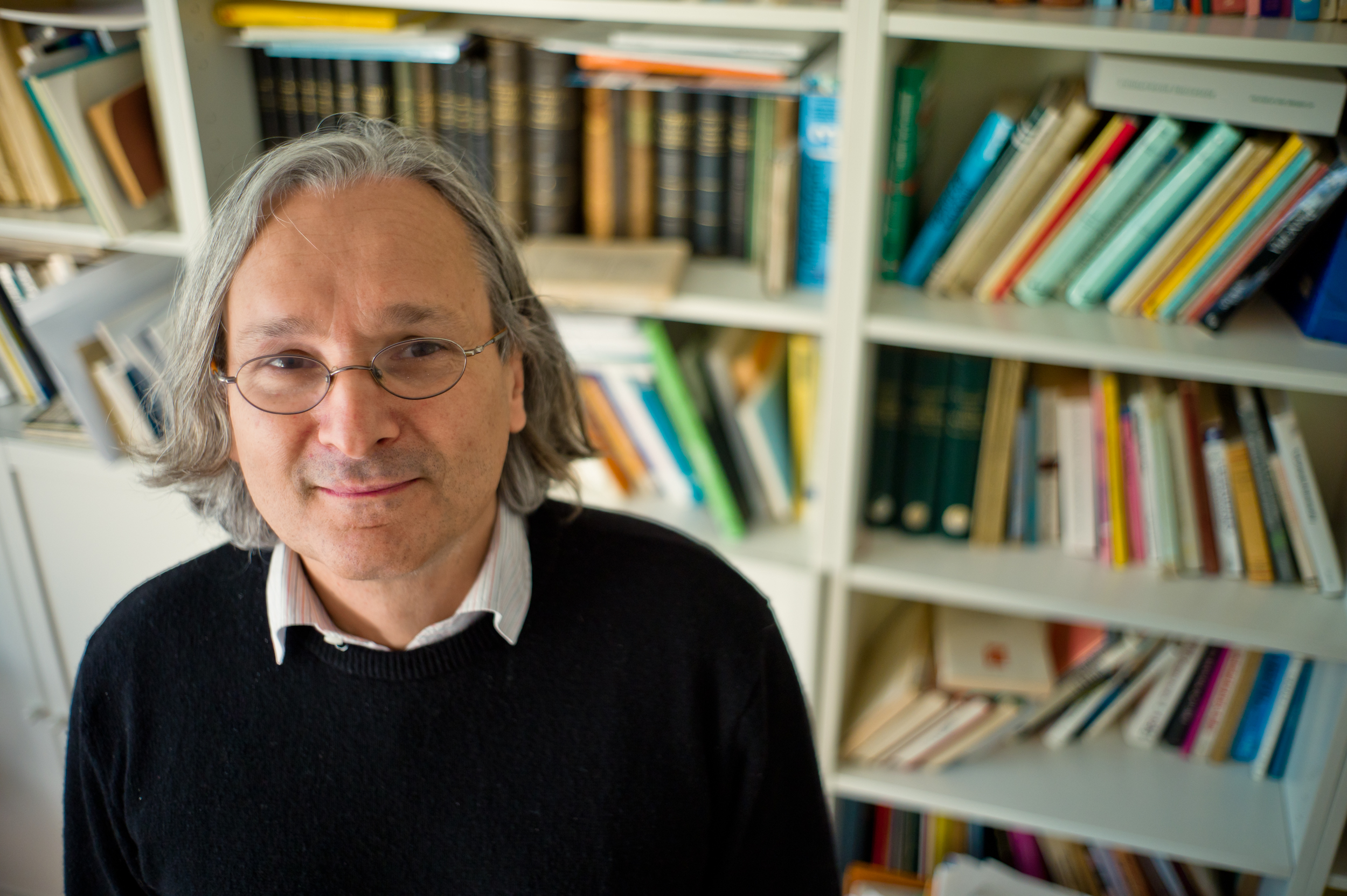
Étienne Ghys
In addition to the spectacular progress of mathematics in Brazil in recent years, the Brazilian mathematical community has been very important for the development of mathematics throughout Latin America. For several decades, Brazil has attracted many students from the region, offering them very good working conditions. Most Latin American mathematicians have visited the country for collaboration at some stage of their careers, so the influence of Brazilian mathematics extends throughout the region. Last but not least, the most important series of mathematical books and monographs published in the region are originally produced in Brazil. Many of them have been translated from Portuguese into Spanish and are textbooks for advanced mathematics courses in several Spanish-speaking countries.
Andrés Navas (president), Sociedad de Matemática de Chile (SOMACHI)
Brazil has played an important role in the development of mathematics in Mexico and the region. For example, research groups in dynamical systems that exist in several countries originated in Brazil. From the perspective of Latin American cooperation, Brazil has always played a fundamental role. This cooperation began decades ago, mainly through the Latin American Schools of Mathematics (ELAM), which were initiated in Brazil. This cooperation paved the way for the creation of UMALCA and…
Organization of the first Latin American Congress of Mathematics, held in 2000 in Rio de Janeiro.
José Seade (director), Mathematics Institute, Universidad Nacional Autónoma de México
The Brazilian mathematical community has been very active in promoting mathematics in Latin America in various ways. IMPA has played an important role in disseminating the latest developments in the region, with generous support for colleagues from our countries. The importance of the initiative of Brazilian colleagues in establishing UMALCA and, more recently, the Mathematical Council of the Americas, cannot be overstated. The organization of ICM 2018 in Rio de Janeiro is perceived as a success for the entire region.
N. Andruskiewitsch (president), Unión Matemática Argentina.
Brazil has had a great influence on mathematics in Latin America, and especially in Uruguay. A considerable number of Uruguayan mathematicians have obtained their doctorates there.
from Brazilian institutions, and have maintained even stronger collaborative ties with Brazilian colleagues over the past 30 years. Brazil also played a key role in the creation of UMALCA and has continued to be a strong supporter of the Union to this day.
Robert Markarian (rector), Universidad de la República, Uruguay.
Members of the Brazilian mathematical community are highly committed to the goals of the Mathematical Council of the Americas: to highlight mathematical excellence in the Americas and promote scientific integration among all mathematical communities on the continent. Brazilian mathematicians played a key role in establishing the MCofA in 2010 and have been fully involved in regional cooperation. Activities sponsored by the MCofA include the Mathematical Congress of the Americas, where Brazil plays a very important role. The MCA 2017 took place in July 2017 in Montreal, and Brazil is one of the main supporting countries, along with Canada, the USA, and Mexico. The international reputation of the Brazilian mathematical community informs Brazil's offer to join Group V of the IMU.
Susan Friedlander (president), Mathematical Council of the Americas.
Read also: PROFMAT provides in-depth training for teachers
IMPA inaugurated a postgraduate program in mathematics in Brazil.
The Gutierrez Prize for best thesis in Mathematics is now open for entries.